Can we make sense of sensors for dairy cows?
The latest innovations and insights
The latest innovations and insights
We are learning fast when it comes to sensors for dairy cows. But what are the latest innovations and insights? Dairy Global talked to Arnold Harbers from Nedap about what is yet to come.
Sensors are making their way in dairy farms around the world. Often, sensors are used for heat detection. But these sensors can tell us so much more. Think of data around eating, rumination, non-chewing, lying, standing, steps, and number of times the cow stands up. To speed up our knowledge about this, Dutch company Nedap has started an extensive field study in 2016 on eight dairy farms together with Utrecht University, Wageningen University and Vetvice Consultancy. Arnold Harbers, data analyst at Nedap is actively involved in this field study and explains more.
The goal of the project is to create tools that can help producers improve their dairy cow transition management. Ultimately, we want to make it possible for every cow to transition healthy. That is of course ambitious but I believe it is good to have big dreams.
We believe that with the information provided by sensors we can give producers and their vets and consultants tools to improve transition management. The information from the sensors can identify areas for improvement, can show effects of management changes and can monitor transition management.
In this project we do extensive health checks by vets in the pre-fresh and fresh cows, and collected sensor data from all cows on eight dairy farms. Together with the production and reproduction records of these cows we believe we can identify the cows with a successful transition.
From the sensor data we want to extract feed forward indicators regarding transition management. These indicators are to monitor and improve transition management.
By far service and support is the most important feature of a good sensor. I really believe it is even more important than price. A cheap sensor with limited service or support is actually a very expensive sensor. I believe the Nedap sensor is very competitive especially because we use existing channels for service and support. Our sensor is integrated in reproductive management solutions of AI companies and in the milking solutions of major milking equipment companies. These companies have worldwide distribution channels. Using this existing network Nedap can ensure a good service and support all day, every day around the world.
Of course, there are other important things as well. A good sensor does more than just heat detection. A good sensor tracks a cow 24/7 and collects information that is otherwise hard to measure. Eating time, rumination time, non-chewing time (time not eating and not ruminating), lying time, number of steps, number of standups are examples of features that good sensors collect. Doing this manually for every cow, all day, every day is impossible. Yet it is important to know this because it has an impact on farm profitability.
Another important feature in my opinion is electronic identification in the sensor. This is essential in the production of first-class quality milk in milking robots or conventional parlours. Electronic identification is also important in combination with sorting gates. Based on sensor information cows that need treatments or extra checks can be sorted automatically.
In the end a good sensor is a sensor that improves the major processes on your farm, like milk production, reproduction and feeding.
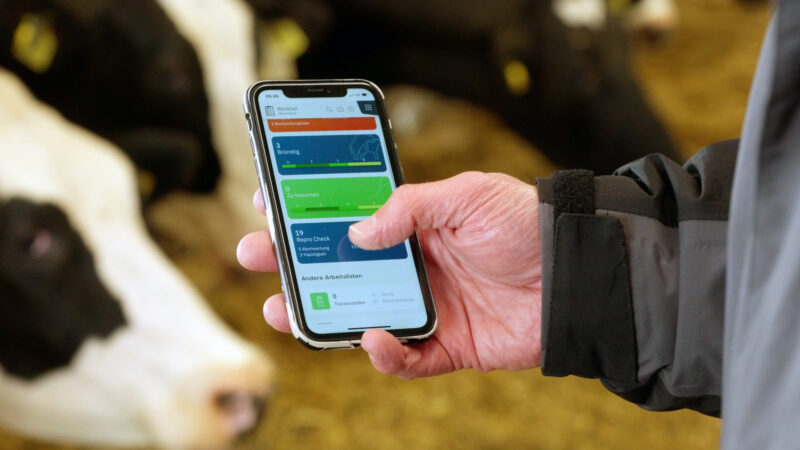
“Having sensors is one thing, but it is important that sensor data is turned into user friendly alerts, worklists, reports, barn maps and insights. This way, it answers the questions that farmers have, such as: Which animal needs immediate attention? (urgent health attentions and heat alerts), which animals need treatments? (fertility and health worklists), what happens if I change feeding strategies, milking procedures or housing conditions? (group behavior reports), where to improve on the long run? (group and herd performance insights) and are workers doing what they need to do? (can be extracted from sensor information). By having answers to those questions, sensor technology helps the farmer provide the right information at the right time for the right person on the farm”.
This is about what the data tells us. Feedback looks backward. It is about results and outcomes. You can learn from it, and you can use it to set targets and thresholds, but you cannot steer on it. For that, you are too late, and the result is already there. Examples of this are days open, last week’s rumination time and percentage of cows with retained placenta.
Feed forward provides information that will guide results in the future. When feed forward indicators are good, the process will produce results that match your end goals. When they are not okay, you will want to correct things. For instance, body condition score (BCS) during the dry period is feed forward for fresh cow problems. Eating time, rumination time, feed intake, rumen fill, and BCS during the start of lactation are feed forward for the process of getting cows pregnant.
In the project we aim at feed forward indicators. We believe these types of indicators are very promising and are underrepresented in the current indicators available to producers.
“Sensors are a very good way to keep a close eye on the fertility, health, well-being and location of every cow. And this can be done 24/7. This is important as farms and herds are getting bigger. Farm owners struggle to get qualified, motivated and affordable staff. In addition, sensor technology makes it possible to implement ‘Management by exception’ on large farms. This means: only focus on those cows that need attention while not disturbing daily routines of the cows that do not need attention or treatment. Dairy cows are workaholics. They need to spend a lot of time feeding and lying without interruption. Lockup time is a huge interruption in the daily routine of a dairy cow. Minimizing lockup time is a good way to improve the life of a dairy cow. She will reward you with higher milk yields. Sensors have the potential to reduce lockup time because you do not need to lockup the entire group for cow checks and treatments.
Sensor information can also be used at operational, tactical and strategic levels. Operational level is the daily work that needs to be done.
Tactical and strategic levels focus on the mid and long term. Sensors can help because they actually show what your cows are doing. If you decide to improve your feed management (diet composition, feeding time, push ups, etc) the sensors will tell you if your cows think it is an improvement too. Together with the milk production and reproduction results of your cows this gives you an answer whether the change in feed management was a true improvement.
“Well, the sensors can give an automatic alarm, such as: ‘This cow shows abnormal behaviour.’ This is a very helpful tool. But with proper cow observations, like monitoring temperature, BCS, locomotion, hygiene, manure, rumen fill and milk production, currently available sensor technology will not often point out a truly sick cow that you haven’t detected already. Sensors can confirm your suspicion that a cow is struggling, though. Plus, they can give you a better impression of how sick a cow is and how long it has been having problems. Skilled people are still necessary to make the final call, but sensors add extra information to this process so they can make better decisions.
Sick cows are a good example of a feedback indicator: once the cow is sick, you are too late. With sensors we want to identify at-risk cows. This is a feed forward indicator because you have the opportunity to prevent the cow from becoming truly sick”.
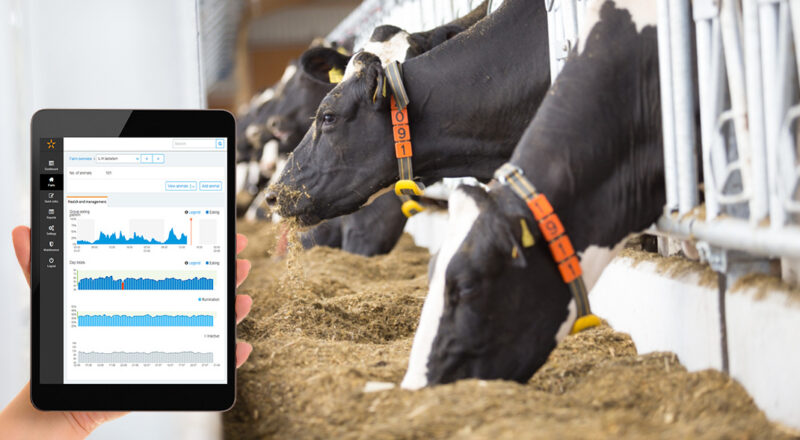
“The transition period is a very delicate period for the dairy cow. A perfect start after calving ensures a healthy lactation with good production and fertility. For example, it is important that the cow eats enough before calving and straight after to be able to maintain the milk production at a high level. With monitoring eating behavior we make sure there is a sufficient and stable feed intake. Measuring rumination is important to make sure there are no problems in the rumen that can lead to ketosis, acidosis, displaced abomasum (DA) and milk fever. Activity sensors are key as they measure how active the transition cow is. Reduced eating and/or ruminating makes the cow less active. And a less active cow means a potential health issue.
These changes are subtle and difficult to observe by people. We already see that cows that develop ketosis spend less time eating and ruminating in the entire dry period. This change is consistent, but less than an hour per day. Sensors can track these changes and notify you which animals are at risk for developing ketosis. This gives you the option to treat this cow and help her to a good start of the lactation”.
This study will continue for several years. We are at the start of discovering all the possibilities to improve transition management. That is a really exciting journey and I am anxious to know where we will be in a couple of years. I think the biggest knowledge gap we have right now is to define the success factors of a healthy transition. Once these are known we can develop effective feed forward indicators that the sensors can measure. Producers can use these indicators to improve their transition management and that should ultimately result in a healthy transition for every cow.


