Lameness: the silent profit killer in your barn
Did you know that lameness accounts for 15% on average [1] of all dairy cow culls worldwide? Alongside fertility problems and udder health issues, it consistently ranks in the top three reasons for involuntary culling. That’s no coincidence: lameness affects almost every vital function of a cow – walking, eating, lying down, showing heat, and recovery. The result is reduced milk production, fertility, longevity, and ultimately, animal profitability.
Serious economic damage
The financial impact of lameness is enormous. According to research, lameness costs a dairy farm an average of $4.50 per lame cow per day based on an average yearly incidence rate of 50%[2] .
This includes direct cost for treatment and extra labor as well as reduced revenues of 10 to 30% lower milk production, premature culling, reduced fertility, increased risk of other health issues and lower animal welfare scores.
The good news? Most of this damage is preventable.
Early detection always pays off
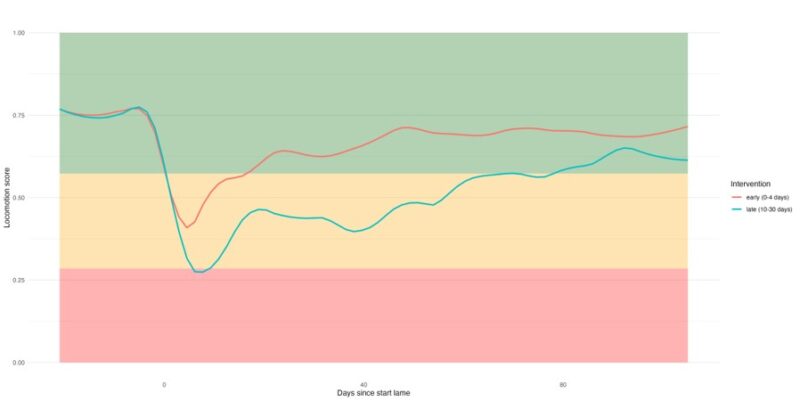
The sooner you detect lameness, and treat it prompt and effective[3], the smaller the impact. For both your animals and your bottom line. Here are a few proven benefits of early intervention:
- Lower treatment time per case: Early treatment (stage 1) saves time compared to treating advanced cases.
- Preserved milk yield and fertility: Prevent losses in milk and avoid unnecessary extension of calving intervals.
- Longer productive lifespan: Cows that don’t become chronically lame stay healthier and productive for more lactations.
- Improved animal welfare and public perception: Healthy cows score higher in welfare audits. Important for quality programs and increasingly valued by consumers and supply chains.
Smart technology that has your back
Many dairy farmers want to act sooner, but lack time, insight, or objective signals. That’s where technology comes in. Automated detection systems monitor cow behavior continuously – 24/7, without missing a beat.
Nedap Locomotion Monitoring with the SmartSight camera automatically records the cows’ movement patterns. Thanks to AI-powered vision technology, the system detects subtle signs of lameness, often before you or your staff even notice. This allows you to take faster and more targeted action, without relying on chance observations or lengthy monitoring.
The result: fewer severe cases of lameness, reduced direct costs and economic losses, and healthier cows.
The financial impact of Nedap Locomotion Monitoring
By continuously monitoring the locomotion of each individual cow, the SmartSight camera enables farmers to detect and treat lameness at an early stage. Early intervention reduces the duration of lameness cases by an average of 40 days.