
Kim Sass-Hauschildt
Manager Westerkamp Holsteins dairy farm
Hemdingen, Germany
For Kim Saß-Hauschildt of Westerkamp Holsteins, progress in dairy farming isn’t just about more cows, it’s about smarter farming. Located in Hemdingen, around 30 kilometers northwest of Hamburg, Westerkamp Holsteins has grown significantly in recent years. “We went from 200 to 500 cows and are now at roughly 750,” says Kim. Scaling up the operation meant a greater need for precision, efficiency, and insight.
That’s where technology stepped in. “Today it’s the data that underpins everything,” Kim explains. “That’s the beauty of it. We move away from gut feelings and rely on data and facts.” With the adoption of Alta Cow Watch via the Nedap Now platform, Westerkamp Holsteins embraced a future built on real-time monitoring and reliable data.
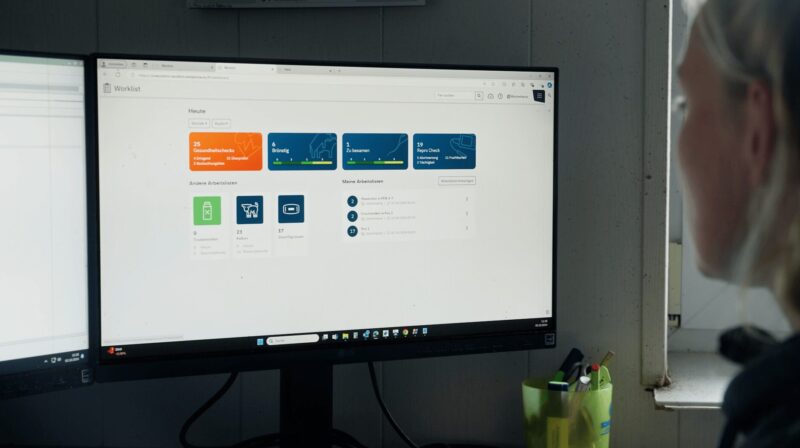
The implementation of the Nedap SmartTag Ear has significantly changed the daily workflow on the farm. “Historically all cows were locked at the fence… temperature was taken, ketosis tests were done,” Kim recalls. “Nowadays it’s reduced to about 20 to 30 minutes of looking at work lists.” Rather than handling every cow, only those flagged by the system require attention, leading to less stress for both animals and staff.
This efficiency not only saves time, but also enhances cow welfare. “So at the end of the day the cow can be more of a cow,” Kim says, adding that “we can focus on the key animals that we still have to examine more closely.”
With alerts allowing early intervention, illnesses are often treated before they escalate. “Before it gets seriously ill, it has already been treated,” Kim notes. This proactive approach improves overall herd health and reduces the need for reactive measures.
"Historically all cows were locked at the fence... temperature was taken, ketosis tests were done. Nowadays it’s reduced to about 20 to 30 minutes of looking at work lists.”
Westerkamp Holsteins has also seen measurable improvements in fertility and productivity thanks to the technology. “What we’ve simply observed with the technology over the last four years is that on average the second and third insemination of the cows takes place 20–30 days earlier,” Kim says. “That means the herd is back in milk sooner, and the cows produce more milk.”
Looking ahead, Kim is optimistic. “For the future we assume that, with the system, we will continue to improve, that we’ll achieve better results… because we are closer to the animal.” And that connection, made possible by reliable, real-time data, is what drives their continued success.
Kim places a high level of trust in both the system and its provider. “What makes me very, very optimistic about the ear tags is that Nedap, as a company, has very high quality standards,” he says. “As of today, the technology is absolutely fully matured. I would definitely recommend it to every fellow professional.”
By embracing data-driven herd management and intelligent technology, Westerkamp Holsteins has set a new benchmark in modern dairy farming. One where the cow is at the center, and decisions are guided by facts, not guesswork.
Want to discover how Nedap technology can support the future of your farm? Westerkamp Holsteins proves it works. Find your local distributor here to introduce this technology to your farm!
Learn more about Nedap CowControl Get in touch with Alta Genetics
The Nedap SmartTag Ear has significantly increased the efficiency of the daily workflow
Efficiency saves time and enhances the cow welfare. “The cow can be more of a cow”
Alerts allow for early intervention and illnesses are often treated before they escalate
On average the second and third insemination of the cows takes place 20-30 days earlier.


