
Pádraic and Liam Harnan
Owners
County Meath, Ireland
Nedap CowControl
Heat Detection
Health Monitoring
Herd Performance Trends
Exact dates are crucial for successful use of sexed semen. The biggest factors influencing success in a herd are timing and picking the most suitable cow.
Timing plays a vital role in conception with sexed semen. It is recommended to serve cows later than the norm. ‘When semen is sexed, each sperm has had the decapitation process started Timing plays a vital role in conception with sexed semen, and it’s recommended to serve cows later than the norm. When semen is sexed, each sperm has had the decapitation process started during the sex sorting procedure. This means it has a shorter fertile period in the reproductive tract once the cow is served. To maximise success, insemination should be as close as possible to ovulation. Ovulation generally occurs around 30 hours after the start of standing heat.
To get the most out of sexed semen, cows should be served between 14–22 hours after the start of standing heat. Knowing exactly when that standing heat began is key—and heat detection systems like Nedap CowControl can make a big difference.
Another factor that strongly influences success with sexed semen is choosing the right cow. Setting clear criteria helps achieve the best conception rates. Ideally, cows should have cycled once (preferably twice), have a BCS above 3.00, no reproductive issues, and be less than 50 days in milk on the day of AI.
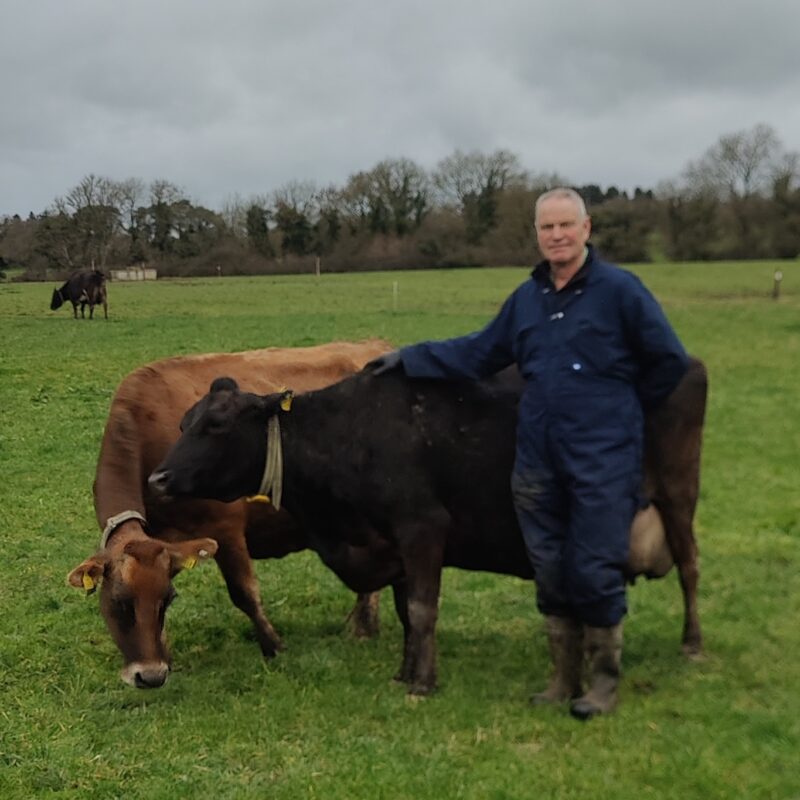
Pádraic and Liam Harnan, who milk 140 cows outside Kilcock, Co. Meath, use the data from Nedap CowControl, to select the ideal candidates for sexed semen. ‘Primarily we’re selecting our best cows based on KG Milk Solid produced, but we use the data from CowControl to refine that. As soon as cows start calving, we’re able to build a picture of each cow’s reproductive activity. For sexed semen, we chose cows that calved early, have a history of going in calf first time, and have not had any reproductive issues,’ says Pádraic. ‘With Nedap CowControl, I have all that info right there on my phone in the app. It’s priceless.’
Pádraic installed Nedap CowControl in early 2022. That breeding season, he purchased 60 units of sexed semen as a trial. He put collars on 30 cows and used a CIDR program for 30 more of the cows to breed all replacements from their best cows to inseminate in the first 14-16 days of breeding, bringing cows due to come on heat in week three into week one of breeding.
‘The results with the CIDR program were 60% conception rate to first service. The 28 cows with collars had a conception rate of 61% to first service,’ clarifies Pádraic, ‘We’re really impressed with the Nedap collars. It’s taken the labour out of heat detection and the data it provides us gives us great confidence to use sexed semen.’
Pádraic and Liam used sexed semen on their maiden heifers too. ‘We used a PRID program with the heifers, and we only got a 6% conception rate to first service. We were really disappointed with that, and we’re strongly considering putting collars on the cows for next year.’
The Harnans are also seeing the impact of Nedap CowControl on fertility through transition management. ‘With CowControl, any reproductive issue that crops up after calving is dealt with quickly. I think that has a big impact on the fertility of the herd for the rest of the breeding season, because the problems don’t develop into something more serious when they’re caught early.’
Sexed semen gives Irish dairy farmers the opportunity to increase efficiency by breeding from their best cows and utilizing more beef semen to reduce the number of dairy bull calves entering the national herd. Using sexed semen with Nedap CowControl, has paid dividends for these farmers; do you want to join them?
conception rate to first service
cow for sexed semen
fertility problems


